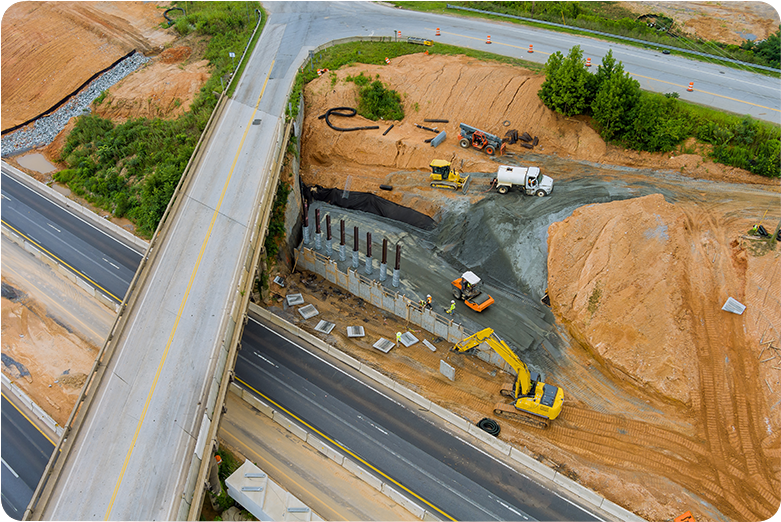
The Camino Colombia Toll Road emerged as a critical infrastructure response to the significant increase in cross-border traffic following the implementation of NAFTA. Designed to improve north–south commercial access between Mexico and the United States, the project involved the construction of a $100 million, 22-mile two-lane tollway, including 10 roadway intersections and bridge structures. Built using local materials—eight inches of prepared fill, 10.5 inches of stabilized asphalt, and 2.5 inches of HMAC—the project required precise coordination, consistent material verification, and continuous quality oversight.
The Challenge
With rapidly growing freight movement, multiple construction segments, and heavy commercial load requirements, the project demanded a digital, real-time quality assurance system capable of managing complex field operations and material performance tracking. The Design-Build team needed a centralized platform to maintain total visibility over inspections, material usage, compliance with TxDOT standards, and acceptance testing. Manual processes could not meet the pace, volume, or accuracy needed for a corridor of this scale. A modern, technology-driven solution was essential to keep the project on schedule, maintain documentation integrity, and ensure every decision was supported by reliable data.