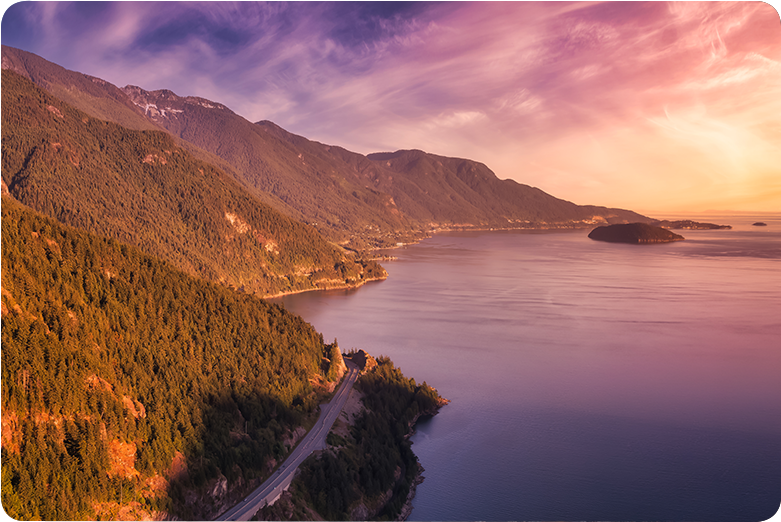
In 2005, the Province of British Columbia initiated the Sea-to-Sky Corridor Improvement Project under a design-build agreement with Peter Kiewit Sons’ Co. The goal was to transform 62 miles of Highway 99 into a safer, more reliable transportation corridor between Vancouver and Whistler ahead of the 2010 Winter Olympic Games.
Spanning 100 kilometers (62 miles), the program represented one of Canada’s most complex transportation upgrades at the time, with a total capital investment of approximately CA$600 million. The project scope included 450,000 metric tons of asphalt paving, 2.4 million cubic meters of earthwork, 48 new bridges, and 219 mechanically stabilized retaining walls. Beyond Olympic Games readiness, this project addressed long-standing safety concerns, rising traffic volume, and operational bottlenecks in one of British Columbia’s most iconic mountain corridors.
The Challenge
The Sea to Sky Corridor was the primary link between Vancouver and Whistler and the main route of Olympic transportation logistics. The highway required significant safety, capacity, and reliability enhancements to support the anticipated global influx of athletes, officials, and spectators, all within the constraints of an approximately CA$600 million capital program.
Challenging mountainous terrain, narrow shoulders, and historically high accident rates intensified the urgency of improvements. Delivering roadway widening, bridge replacements, and rock slope stabilization across multiple active construction zones demanded precise coordination between all contractors involved, real-time visibility into inspection and materials testing activities, nonconformance tracking, and centralized quality management documentation to ensure compliance with project specifications and maintain strict budget control.