For materials testing laboratories across the United States, the phrase “audit-ready” carries serious operational and business importance. Whether serving Departments of Transportation, municipalities, engineering firms, or commercial clients, laboratories are expected to maintain accurate records, qualified personnel, controlled procedures, and defensible testing results at all times.
An audit may come from a state agency, an internal quality team, or an accreditation body such as the American Association of State Highway Transportation Officials (AASHTO). When it happens, labs must be able to demonstrate compliance quickly and confidently.
In this blog, we will discuss what audit-ready means for U.S. materials testing laboratories, the most common gaps that pose risk, and how digital systems can help labs stay prepared every day, not just when an audit is scheduled.
Who Are The Materials Testing Regulatory Agencies?
Across the U.S., laboratories often work under a combination of the American Society for Testing and Materials (ASTM) International methods, AASHTO procedures, state Department of Transportation (DOT) requirements, and quality system expectations aligned with ISO/IEC 17025 principles.
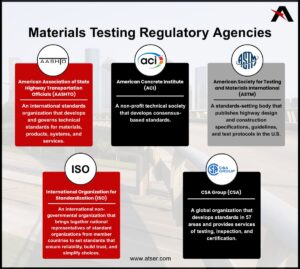
Construction materials testing is used to validate the quality of materials used in projects. This means that in order to provide quality testing, material testing standards have to comply with established industry organizations. Five of the main industry organizations to abide by for materials like concrete, asphalt, cement, and aggregate are:
- American Association of State Highway Transportation Officials (AASHTO): an international standards organization that develops and governs technical standards for materials, products, systems, and services.
- American Concrete Institute (ACI): a non-profit technical society that develops consensus-based standards.
- American Society for Testing and Materials International (ASTM): a standards-setting body that publishes highway design and construction specifications, guidelines, and test protocols in the U.S.
- International Organization for Standardization (ISO): an international non-governmental organization that brings together national representatives of standard organizations from member countries to set standards that ensure reliability, build trust, and simplify choices.
- CSA Group (CSA): A global organization that develops standards in 57 areas and provides services of testing, inspection, and certification.
What “Audit-Ready” Really Means
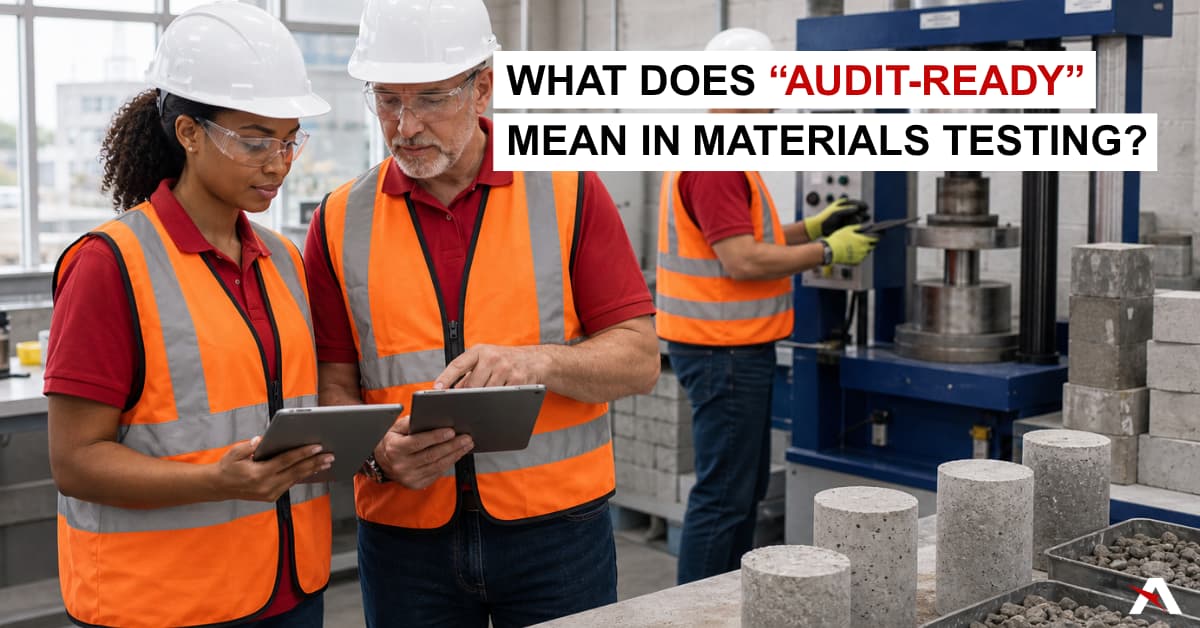
Being audit-ready means your laboratory can produce clear evidence that materials testing orders were performed correctly, by qualified personnel, using approved methods, with traceable documentation.
It also means records can be retrieved quickly, approvals can be verified, and quality issues can be shown as actively managed rather than ignored. Key areas to address are:
A) Controlled Equipment:
A calibration sticker alone does not satisfy auditors; they require comprehensive documentation proving equipment is fit for purpose. Auditors look for evidence that equipment is not only calibrated, but consistently suitable for use.
Auditors expect documentation that includes verification records, maintenance logs, uncertainty support, change control, and full traceability. The central question they ask is whether the lab can demonstrate, at any given time, that equipment is suitable for reported tests and that threats to validity are properly managed. Rather than relying solely on certifications, auditors assess whether the lab can establish control of suitability for intended use, provide objective evidence between calibrations, and maintain effective change control.
They also expect to see available documentation that tracks outputs by asset ID, often in the form of an audit pack containing equipment identification, status, location, calibration details, and exact configuration. This record should also include a complete history of repairs, maintenance, and any variations. Auditors do not rely on calibration certification alone; they evaluate whether traceability meets appropriate standards.
B) Personnel and Competency:
Depending on how far a construction technician is into their career, they must be certified to run tests on materials such as concrete, asphalt, cement, and aggregate. Certifications usually range from American Concrete Institute (ACI), Departments of Transportation (DOT), American Association of State Highway and Transportation Officials (AASHTO), to National Institute for Certification (NICET), the highest and most esteemed certification for construction materials testing. Auditors would expect to see valid certifications from the following certification bodies.
- American Concrete Institute (ACI): some of the required ACI certifications include ACI Field, ACI Agg 1, ACI Agg Base, ACI Adhesive Anchor Inst., ACI Concrete Lab, and ACI Strength. The two of the most important ACI standards to abide by are the ACI Code 318 for safe design and public safety, and ACI Spec 301 that concentrates on concrete construction industry standards.
- National Institute for Certification (NICET): certifications vary in level based on a technician’s designation and focus on soil, concrete, and asphalt. NICET starts at level one for roles such as technician trainee and goes up to level four for more leadership roles, such as senior technicians and quality assurance manager.
- Texas Department of Transportation (TxDOT): some important TxDOT precertifications include: TxDOT 1A, TxDOT 1B, TxAPA SB101, TxAPA SB102, and TxAPA SB103.
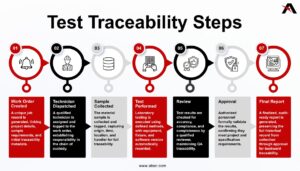
C) Test Traceability: An auditor should be able to pick any test report and “walk backward” through its history. The Chain of Custody: A record of who handled the sample, which specific fixture or extensometer was used, and the exact software version that processed the data.
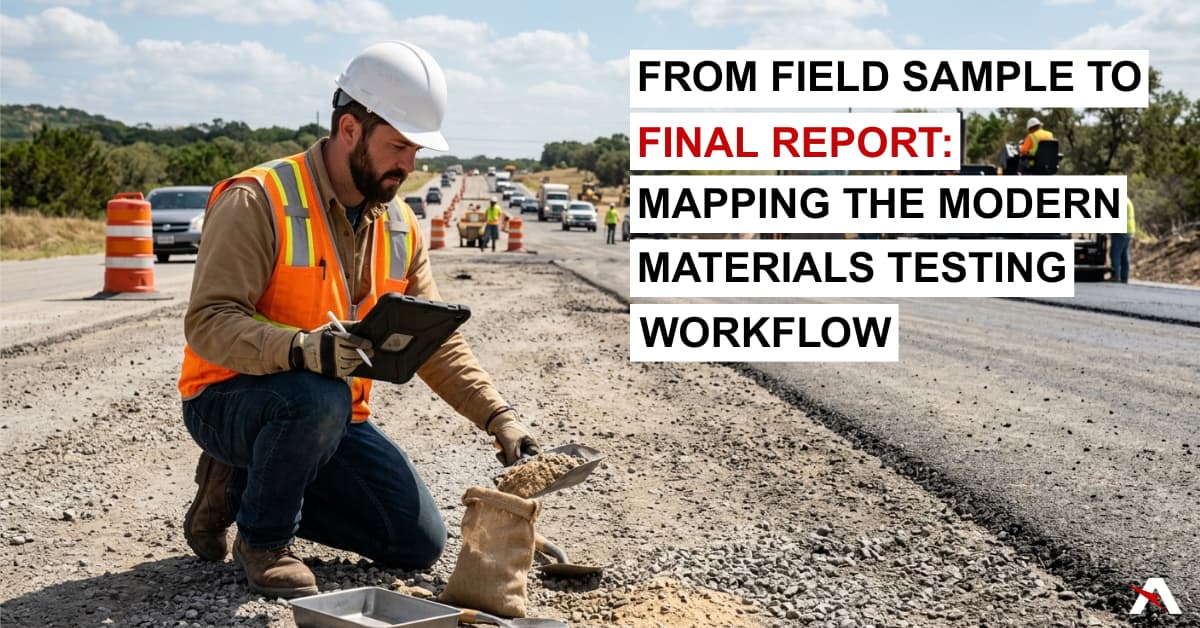
Test traceability begins with notifying a technician of a work order, whether for sample collection or pickup. The technician is dispatched to a specified location to collect or retrieve the sample.
Upon collection, the sample is logged into the database, enabling efficient retrieval through dynamic indexing. Once recorded, required tests are performed and submitted for review, approval, and signoff by a project manager.
After approval, a final report is generated and securely stored within the database. From work order creation to final reporting, all details are systematically recorded, enabling full visibility across the laboratory workflow. Which, in turn, would help auditors review records faster.
D) Documentation Hygiene: Audit readiness means your documentation reflects current reality, not an idealized process. Living Standard Operating Procedures (SOPs) that are regularly reviewed and actually followed on the floor, rather than sitting in a binder gathering dust.
E) Key Documents Every Auditor Will Request
- Stormwater Pollution Prevention Plan (SWPPP)
The SWPPP must be available for inspection under the National Pollutant Discharge Elimination System (NPDES) Construction General Permit.
Weekly inspections of erosion and sediment controls must be documented consistently. Records should also include maintenance activities and installation updates. Waste management tracking must detail proper disposal methods and compliance procedures. The plan should also define clear spill prevention and response measures.
- Equipment Inspections and Maintenance Safety
OSHA requires regular inspection and maintenance of all construction equipment. Qualified personnel must complete inspections and document all findings and corrective actions. Issues identified during inspections should include detailed remediation steps and resolutions.
>Tools and equipment must also undergo routine testing, with monthly records maintained.
- Hazardous Material Reports
An up-to-date chemical inventory must be maintained, including storage locations and quantities. Safety Data Sheets (SDS) must be readily available for all hazardous materials on site.
Audit-Readiness Foundation
To prevent disruption, audit preparation should begin several weeks before the scheduled audit date. Standardized procedures and checklists ensure all required documentation is complete, accurate, and compliant. The process begins with electronic testing, followed by design, dispatch, and real-time project closeout. Materials must meet specifications, remain compliant, and be properly labeled for audit review.
Maintaining compliance requires adherence to industry standards and state DOT-specific requirements. Project specifications must reflect the most current standards issued by governing organizations.
Equipment status must remain current to ensure audit readiness and operational reliability. All equipment operators must hold proper certifications to maintain compliance.
Centralizing Documentation and Report Management
A centralized document management system improves accessibility and organization of critical records. Features such as version control, secure cloud storage, and search functionality streamline compliance efforts.
Test reports that are indexed by project and automatically updated for accurate version tracking, enable efficient file retrieval, and support a clear, traceable audit trail.
Proper documentation and maintenance records for testing equipment are essential for compliance.
Documents that need to be prepared include:
- Licenses and Permits: records of state certifications, restrictions, and renewal dates should be kept current.
- Contracts and Lien Documents: necessary documents to prepare during an audit include prime contract agreements, subcontract agreements, warranty forms, and lien waivers. Not all of these documents are necessary for each project; each contract has different requirements.
- Safety and Health Documentation: worker safety training and specialized certifications for equipment operators need to be tailored to specified trades and the scope of work.
- Labor and Payroll Documents: detailed records of employee hours, wages, and overtime pay should be recorded under the Fair Labor Standards Act (FLSA). Deductions from payroll should be explicitly stated and documented to check compliance with state laws.
How Digital Tools Simplify Audit-Readiness
A centralized document management system eliminates reliance on handwritten records and scattered files. Digital solutions streamline audits by keeping accurate, up-to-date records instantly accessible.
Features like real-time reporting or invoicing strengthen compliance and improve documentation reliability. Automated data capture and validation support continuous, real-time compliance tracking.
How ATSER Makes Audit-Readiness Achievable
Maintaining audit readiness is about having the right systems in place to ensure compliance is continuous, traceable, and effortless. This is where ATSER’s Assure-IT™ provides a measurable advantage.
Designed specifically for construction materials testing laboratories,
Assure-IT™ centralizes data, standardizes workflows, and delivers full visibility across every stage of the testing lifecycle, from field data collection to final reporting.
Centralized Data & Instant Retrieval
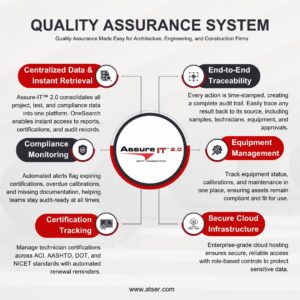
Assure-IT™ eliminates fragmented records by consolidating all project, test, and compliance data into a single platform. With its advanced OneSearch functionality, users can instantly locate reports, certifications, equipment records, and audit documentation, reducing audit preparation time from days to minutes.
End-to-End Traceability
Every action within the system is recorded and time-stamped, creating a complete digital audit trail. Auditors can seamlessly trace any test result back to its origin, including sample collection, technician activity, equipment used, and approval history, ensuring full transparency and defensibility.
Real-Time Compliance Monitoring
Assure-IT™ proactively identifies compliance risks before they become audit findings. Automated alerts notify teams of expiring certifications, overdue equipment calibrations, and missing documentation, helping laboratories maintain continuous audit readiness.
Equipment & Calibration Management
The system provides detailed equipment tracking, including calibration records, maintenance logs, and operational status. This ensures laboratories can demonstrate not only that equipment is calibrated, but that it is consistently fit for purpose and audit-compliant.
Personnel Certification Tracking
Assure-IT™ simplifies workforce compliance by maintaining up-to-date records of technician certifications across ACI, AASHTO, DOT, and NICET standards. Managers receive automated reminders for renewals, ensuring no certification gaps during audits.
Secure, Scalable Cloud Infrastructure
Hosted on enterprise-grade cloud platforms, Assure-IT™ ensures data security, reliability, and scalability. Role-based access controls protect sensitive information while maintaining accessibility for authorized users.
From Audit Preparation to Audit Confidence
With Assure-IT™, audit readiness becomes part of daily operations. Laboratories gain the ability to respond to audits with confidence, backed by accurate data, complete traceability, and fully controlled processes.
Audit readiness should be built into your daily operations. Therefore, If you’re exploring ways to strengthen compliance, improve traceability, and simplify audits, ATSER’s Assure-IT™ can help.
References: