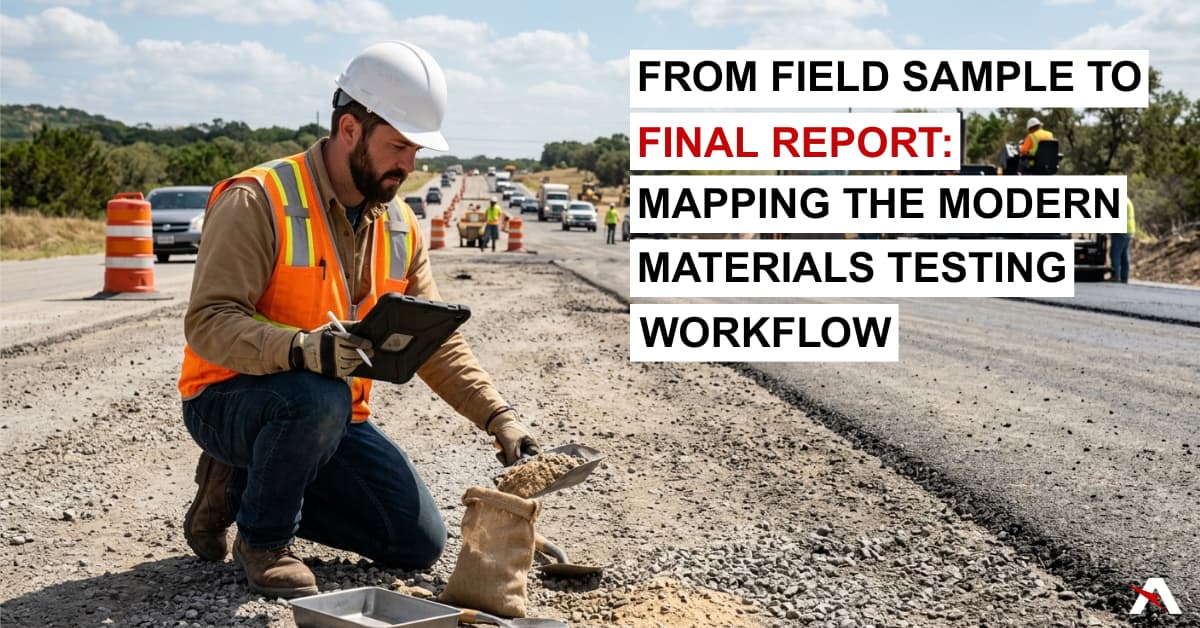

Imagine years of critical project data stored in paper files, destroyed instantly by a fire in your lab. Tragedy, right? Without reliable digital backups, in the best-case scenario, only fragmented information can be recovered from damaged records. Proper field data collection and storage are the foundation of every infrastructure project. In this blog, we will discuss 5 best practices for field data collection for infrastructure projects.
Across civil engineering projects, the difference between reactive project execution and proactive control often comes down to how data is collected, structured, and operationalized. The following best practices represent the foundation for building reliable, scalable, and decision-ready field data systems.
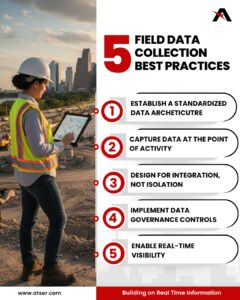
1. Establish a Standardized Data Architecture
Consistency is the prerequisite for trust. Field data should be collected through standardized templates, controlled vocabularies, and predefined workflows that apply across all teams and phases of the project. Without this structure, even accurate data becomes difficult to aggregate, compare, or interpret.
A well-defined data architecture ensures that every inspection, test, and report contributes to a unified dataset rather than a fragmented collection of inputs.
2. Capture Data at the Point of Activity
The value of field data deteriorates rapidly with time. Data should be recorded at the exact moment and location where activities occur, whether during inspections, material testing, or incident reporting. Delayed entry introduces risk through memory gaps, transcription errors, and loss of context.
Capturing data at the source preserves accuracy and allows issues to be identified and addressed before they escalate.
3. Design for Integration Not Isolation
Field data should not exist as a standalone layer. To unlock its full value, it must be connected to the broader project ecosystem, including scheduling systems, cost controls, document management platforms, and laboratory data systems. Integration enables teams to understand how field conditions influence timelines, budgets, and compliance.
Disconnected systems create blind spots; integrated systems create insight.
4. Implement Data Governance Controls
Data quality cannot be assumed; it must be enforced. Effective systems incorporate validation rules, required fields, and automated checks that prevent incomplete or inconsistent entries. Equally important is the governance structure behind the data: clear ownership, defined responsibilities, and accountability for accuracy.
5. Enable Real-Time Visibility
Data that cannot be seen cannot influence decisions. Field data should feed directly into live dashboards and reporting environments that provide immediate visibility into project conditions. This includes progress tracking, quality metrics, non-conformance trends, and testing outcomes.
Enable Best Practices Through Purpose-Built Tech
While best practices define what effective field data collection should look like, execution ultimately depends on the systems used to support it.
In many cases, organizations face not only the challenge of awareness but a lack of proper technological infrastructure. Field teams are often expected to follow standardized processes, capture data in real time, and maintain full traceability, yet they still rely on disconnected tools, manual workflows, or systems that were never designed for the realities of civil engineering projects.
To address this challenge, solutions like Assure-IT™ are designed specifically to operationalize field data collection best practices within a unified environment. Rather than treating data capture, quality management, and reporting as separate functions, Assure-IT™ brings them together into a single, structured workflow that aligns with how projects are executed in the field.
For example, enabling standardized digital forms, Assure-IT™ ensures consistency across inspections, material testing, and daily reporting. Field teams can capture data directly at the source on-site and in real time while attaching supporting documentation such as photos, test results, and notes. As a result, this not only improves accuracy but also preserves the context that is often lost in delayed or manual processes.
From the Field To the Office
Equally important, the platform’s ability to connect field data to the broader project ecosystem ensures that information flows seamlessly across teams. Through integration with project management tools like Manage-IT™, information collected in the field is no longer isolated; instead, it becomes part of a continuous data flow that supports decision-making across teams. In turn, issues identified during inspections can be tracked, resolved, and linked to project outcomes without the friction of moving between systems.
Additionally, Assure-IT™ strengthens data governance and traceability by maintaining a complete audit trail of all activities. Every entry is time-stamped, every update is recorded, and every action is tied to a specific user. Consequently, this level of transparency not only supports compliance requirements but also provides a defensible record in the event of disputes or audits.
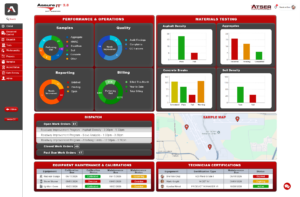
Furthermore, platforms like Assure-IT™ transform field data from a passive record into an active management tool. With real-time dashboards and reporting capabilities, project teams gain immediate visibility into quality metrics, testing progress, and emerging risks. Ultimately, this allows for faster, more informed decisions shifting project management from reactive to proactive.
Strong field data practices don’t happen by chance—they are built through intentional processes and the right technology foundation. If your organization is looking to improve visibility, reduce risk, and bring greater control to project execution, talk to our solutions engineers.
Schedule a call here!
References: